

Drywall Repair
Drywall Repair Done Right
Drywall Repair Done Right
Holes, cracks and dents in your walls happen. A doorknob goes through the wall, a picture gets pulled down, or the house settles and cracks show up in the corners. Whatever caused it, we'll patch it so it looks like it never happened.
What we Fix
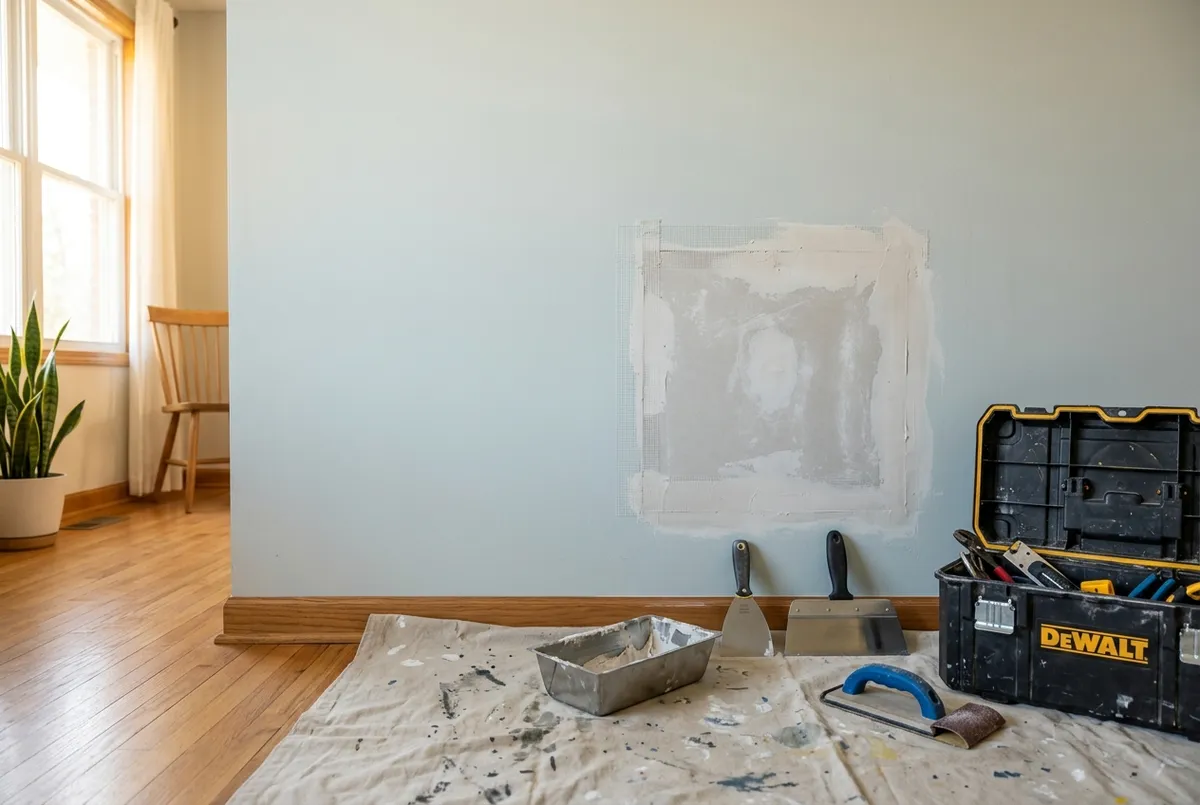
Any hole, crack or damage — we handle it
Ceiling patches
Doorknob holes and small punctures
Cracks in walls and ceilings
Nail pops and screw pops
Dents, gouges and scrapes
Water-stained or damaged drywall sections
Holes left from old fixtures, TV mounts or shelves
What we Fix
Any hole, crack or damage — we handle it
Any hole, crack or damage — we handle it
Ceiling patches
Doorknob holes and small punctures
Cracks in walls and ceilings
Nail pops and screw pops
Dents, gouges and scrapes
Water-stained or damaged drywall sections
Holes left from old fixtures, TV mounts or shelves
What we Fix
Any hole, crack or damage — we handle it
Ceiling patches
Doorknob holes and small punctures
Cracks in walls and ceilings
Nail pops and screw pops
Dents, gouges and scrapes
Water-stained or damaged drywall sections
Holes left from old fixtures, TV mounts or shelves
DISCOVER WHAT OUR CUSTOMERS HAVE TO SAY ABOUT US
REVIEWS
This company was quick and punctual! Very polite and the best priced and more importantly done on same day! HIGHLY RECOMMENDED

Amazing attention,good customer service. Good prices and workers like Yadir Castro. Really good experience. Thanks to all of you in this company.
The men were competent and professional.Very satisfied…
Excellent service and prices! Very honest people. Definitely my number 1 choice when it comes to glass replacement and repair.
it was cheaper compare to other providers and they are incredibly efficient, super fast. they go straight to the point, no hassles.
Muy profesionales rápido y excelente precio
REVIEW US ON GOOGLE

frequently asked questions
When can I sign up for Medicare?
There are a few key windows, and missing them can cost you. Your Initial Enrollment Period is a 7-month window around your 65th birthday, it starts 3 months before the month you turn 65, includes your birthday month, and runs 3 months after. To avoid a gap in coverage, it's best to sign up during the 3 months before your birthday. If you already have Medicare, the Annual Enrollment Period runs October 15 through December 7 each year, and any changes you make take effect January 1.
What does Medicare cost in 2026?
Most people pay nothing for Part A (hospital coverage) because they paid Medicare taxes while working. For Part B (medical coverage), the standard monthly premium is $202.90 in 2026, with an annual deductible of $283. After you meet the deductible, you typically pay 20% of the cost for most doctor services and equipment. Higher earners may pay more for Part B based on income. Part C (Medicare Advantage) and Part D (drug coverage) costs vary by plan.
What's the difference between Original Medicare and Medicare Advantage?
Original Medicare is run by the federal government and includes Part A and Part B. It lets you see any doctor that accepts Medicare, but it doesn't cover everything, things like prescription drugs, dental, vision, and hearing usually aren't included. Medicare Advantage (Part C) is offered by private insurers and bundles Parts A, B, and often D into one plan, frequently adding extras like dental or vision. The tradeoff is that Advantage plans usually require you to use a network of doctors. Which is better depends on your health needs, budget, and preferred doctors.
Do I need a separate plan for prescription drugs?
Possibly. Original Medicare (Parts A and B) does not cover most prescription drugs, so you'd need a standalone Part D plan to get that coverage. Many Medicare Advantage plans include drug coverage already. One important thing to know: if you don't sign up for drug coverage when you're first eligible and go without it, you may face a late-enrollment penalty that gets added to your premium for as long as you have the plan.
What happens if I sign up late?
Late penalties are real and they can be permanent, so this matters. For Part B, the penalty adds 10% to your monthly premium for every full 12-month period you delayed enrollment without other qualifying coverage and you generally keep paying it for as long as you have Medicare. There's a separate penalty for Part D drug coverage too. The good news: if you're still working and have coverage through your job (or your spouse's), you may qualify for a Special Enrollment Period that lets you delay without penalty.

How it works

Cut or fill
We cut out or fill the damaged area whichever gives the cleanest result.

Patch & sand
We patch it flat and sand it smooth so there's no bump or ridge left

Match texture
We match the texture to the rest of your wall so the repair disappears.

Paint
If you want, we can paint it so it blends right in — just ask.
Got a hole or crack that's been bugging you?
Call us or send a message for a free estimate — no pressure.
Got a hole or crack that's been bugging you?
Call us or send a message for a free estimate — no pressure.
HandyMac
HandyMac — Home Repair &
Maintenance
cONTACT

service areas
East Palo Alto
Atherton
Redwood Shores
San Carlos
Belmont
Foster City
Woodside
Portola Valley
service areas
San Francisco
The Peninsula
Palo Alto
Burlingame
Millbrae
Hillsborough
San Mateo
Menlo Park
HandyMac
HandyMac — Home Repair & aintenance
cONTACT